



Travel Guide

T'rung is one of the popular musical instruments closely associated with the spiritual life of the Ba Na, Xo Dang, Gia Rai, E De and other ethnic minority people in the Central Highlands of Vietnam.
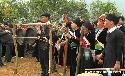
Name of ethnic group: Kho Mu (Xa Cau, Mun Xen, Pu Thenh, Tenh, and Tay Hay)
Population: 56,542 people (Year 1999)
Locality: Nghe An, Lai Chau, Son La, Thanh Hoa, and Yen Bai provinces.
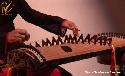
The 36-string zither is a percussion instrument. It has the shape of an isosceles trapezoid, with a slightly convex sound board made of light, porous, unvarnished wood.

Name of ethnic group: Kinh (Viet)
Population: About 65.8 million people (Year 1999)
Locality: These people live in all provinces but are densely clustered in the delta areas and urban centers.
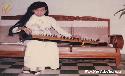
The tranh zither is also called the thap luc cam or sixteen-stringed zither. The tranh zither appeared in Vietnam in the time of the Tran dynasty (12th-13th centuries).
Name of ethnic group: La Chi (Cu Te and La Qua)
Population: 10,765 people (Year 1999)
Locality: Xin Man District in Ha Giang Province, and Muong Khuong and Bac Ha districts in Lao Cai Province.
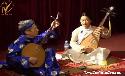
According to ancient carvings, the moon-shaped lute appeared in Vietnam in the 11th century. Intended to be played by men, the lute has maintained a very important position in the musical traditions of the Kinh. Therefore, this instrument is widely used in their folk, court, and academic music.

Name of ethnic group: La Ha (Phlao, Xa Khan and Khla)
Population: 5,686 people (Year 1999)
Locality: Son La and Lao Cai provinces.
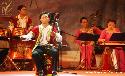
Dan nhi is a simple instrument that can achieve miracles. A folksong of the north, a lullaby of the centre, or a cai luong aria of the south will lose much of its charm if not accompanied by the dan nhi, a traditional instrument capable of a great variety of expression.
Name of ethnic group: La Hu (Xa La Vang, Co Rung, Khu Sung, and Kha Quy)
Population: 6,874 people (Year 1999)
Locality: Muong Te District of Lai Chau Province.
Featured Tours