



La Hu ethnic group
Customs and habits
The La Hu lives in villages built
on mountain slopes. These houses are level with the ground and divided by
bamboo partitions. The altar for the ancestors and the kitchen are always
placed at the bay of the house, which is used for the family sleeping quarters.
The right of inheritance is only reserved for sons. Young men and women are
free to choose their partners. After the wedding, the groom has to live with
his wife's family for several years, but then takes his wife to his family
house.
La Hu women usually give birth in
their bedroom. Three days later, the baby is given its name. If an unexpected
guest comes during this time, he or she is given the honour of naming the
newborn. The worship of the ancestors is reserved for the dead parents. Every
year the La Hu hold ceremonies to worship the spirits of the earth and to pray
for peace. They conjure up the souls of the corn and the rice spirits after the
sowing and harvesting duties have been completed.
Culture
La Hu language belongs to the
Tibeto-Burman Group. There are a dozen "khen" (pan-pipe) dances in La
Hu culture. The songs are sung in the Ha Nhi language, but the La Hu has kept
their own rhythms. The La Hu have a rich heritage of ancient tales, and they
even maintain their own calendar in which the days are defined corresponding to
twelve animals, including the tiger, rabbit, dragon, mouse, sheep, monkey,
rooster, dog, pig, squirrel, snake and buffalo.
Costumes
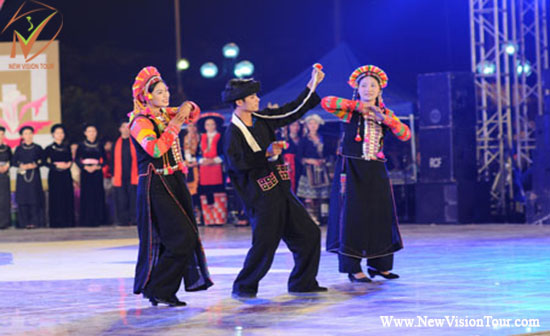
Women wear trousers and a long-lap
shirt that falls to their ankles. They also wear a short vest during festive
days. The collar, chest stripes, and sleeves are either embroidered or sewn
with colorful pieces of cloth, silver, tin coins, or red fringes.
Economy
The La Hu lives on slash-and-burn
cultivation and hunting. La Hu men are very skilled at blacksmithing and making
rattan chairs, trays, mats.
