



Travel Guide » Vietnam Travel Guide » Vietnam Culture

Hue has long been Vietnam's centre of wooden architecture, many of the buildings here, including royal palaces, are Ruong style.
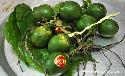
According to legends, chewing quid of betel and areca has been a custom since the Hung Vuong period and is connected to the antique legend of betel and areca.
From an early period a special ideographic script known as chữ nôm was also devised for transcribing spoken Vietnamese. According to annals dating from the late 13th century, the poets Nguyễn Thuyên and Nguyễn Sĩ Cố were the first to write in chữ nôm. At the turn of the century King ...

This trend received a boost with the implementation of đổi mới ('Renovation') in 1986, which afforded Vietnamese writers a measure of creative freedom, allowing them to look at life from an individual point of view rather than focusing on the role of society as a whole.

Ben Thanh Market is situated at the intersection of Le Loi Avenue, Ham Nghi Avenue, Tran Hung Dao Avenue and Le Lai Street, 700m south-west of the Rex Hotel.

Phuc Trach Pomelo - Vietnam: in Vietnam, there are many tasty varieties of grapefruit. Ordinarily, the grapefruit is named for the locality where it is grown. For example, in the North, there is the Doan Hung grapefruit (Phu Tho Province), in the Central there is the Phuc Trach grapefruit (Ha Tinh ...

Typical food in the North Vietnam: Pho (Rice noodle soup) Com (Grilled green rice) Cha ca la vong (la vong grilled fish pies) Banh cuon (Rolled rice pancake).

La Vong grilled fish (cha ca La Vong) is a favorite dish of Hanoi people. Hanoi now has several shops selling grilled fish, but no one of them can equal Cha ca La Vong in term of quality and flavor. Located in Cha Ca Street, Cha ca La Vong is the famous restaurant not only to Hanoians but also ...

How did the white rabbit become the ritual object? Tho Trang is a ritual object during the Mid-Autumn Festival.

The ancient La Van is also named La Mien - the home of the traditional vocation - planting cotton and weaving cloth. The name La Van appeared firstly in 1941. Nowadays, La Van village belongs to Quynh Hong community, Quynh Phu district, Thai Binh province. On the 4th of the first lunar month every ...
Featured Tours