



Vietnam Puppetry (Roi Nuoc)
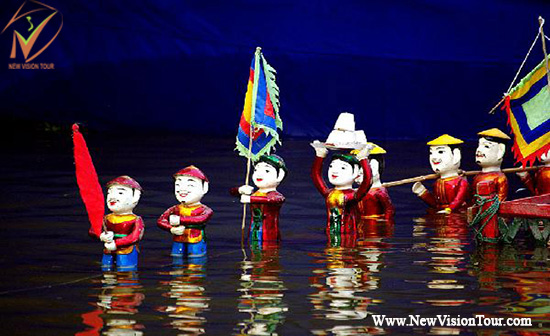
Vietnam Puppetry - Roi Nuoc is a traditional
Vietnamese performance art using colorfully painted and costumed wooden puppets.
They most closely resemble marionettes, with jointed arms, legs and heads. Roi
Nuoc is controlled by a puppeteer by way of long poles that are hidden under
water. The stage is a small pool, with a scenic backdrop, hiding the
puppeteers. Performances are based on traditional folklore or historical
events. Music and audio, either recorded or live, accompany the performances.
Puppetry is a traditional performing art long
existed among the ethnic groups living in Vietnam. It originated from the wet
rice civilization since the Hung Kings founded the country. The Sung Thien Dien
Linh stele erected at Long Doi Pagoda, Doi Son commune, Duy Tien district, in
Ha Nam province in 1121 under the Ly Dynasty bears the inscription that the
puppet show was first staged in honor of the King’s longevity.
Under the natural conditions and their agricultural
activities, the Vietnamese people have been close to the water. For this
reason, Vietnamese peasants have created water puppetry into a unique
performing art of the country. In the past, water puppet shows usually took
place when the farm work had been generally completed, in springtime or in
village festivals. The French called water puppetry with gentle puppet figures
“The soul of the Vietnamese rice fields”, and commented, “With creativeness and
sense of discovery, water puppetry can rank among the most important performing
art forms of the puppetry theater”.
The way of using water to activate the puppets and
to hide the manipulating apparatus and the maneuvering of the puppet figures
constitute the most splendid creativity. Water gives breath to puppet figures
and makes them look more lively and cheerful. Water is also involved in the
show together with the puppets as it was once commented, “Water also becomes a
character of the puppet show”. The peaceful water surface gently
undulating with a flock of swimming ducks becomes romantic in the illusory veil
of smoke when a group of fairies land for singing and dancing. But it
also becomes seething and furious during naval battles or when powerful yellow
dragons are emerging.
A French newspaper article wrote: “The puppet
figures are manipulated with an unimaginable cleverness. It’s like they are
commanded by magic power”. This is the uniqueness, attractiveness and creativeness
of water puppetry.
In the past, water puppet shows used to be staged in
the broad daylight and in the open air. Few theatrical performances show such a
perfect harmony with the natural scenes as does the water puppet show.
Amidst romantic scenery, spectators have a chance to contemplate an artistic
genre in which land, water, green trees, cloud, wind, fire and smoke are
present, so are curved red tile-roofed communal houses. In fact this is a
perfect harmony between art, nature and human beings.
Vietnam’s puppetry has been known with its two main
genres: Stage puppetry and water puppetry. Stage puppetry has several forms
such as hand and rod puppets from Dong Minh in Hai Phong Port City and Te Tieu
in Ha Tay province, string puppets from Moc Thieu Hy in Cao Bang and Bac Thai
provinces. Water puppetry, a unique traditional art genre only exists in
Vietnam.
