



Introduction
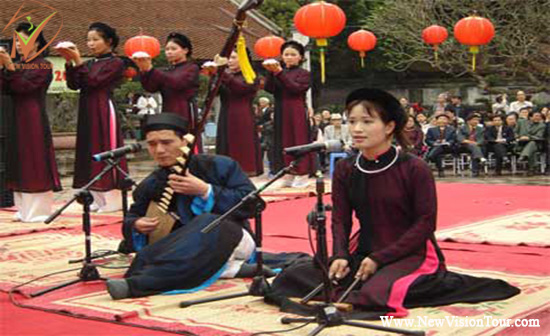
For the Vietnamese, music is considered to be an
essential need; therefore, numerous musical instruments and genres intended for
various purposes have been developed. Vietnamese people use music to express
their innermost feelings, to encourage themselves while working and fighting,
to educate their children in good traditions and national sentiment, to
communicate with the invisible, and to sublimate their aspirations for a happy
life.
The simple and primitive instruments, as well as the
more sophisticated ones, have been preserved to form a rich musical treasure.
Numerous forms of songs and music have also been created and retained. They
include lullabies, children’s songs, ritual songs, festivity songs, various
work songs, courtship songs, riddle songs, melodies, and poem narration. There
are also songs and music for groups, as well as for traditional theatre.
Vietnamese traditional music is diverse due to the
various genres that took shape during different periods of history. Songs of
the same genre often differ very much in melody and expression from ethnicity
to ethnicity. As a result, lullabies, for example, of the Kinh differ from
those of the Muong.
Traditional music has played an important role in
the lives of the Vietnamese. Currently, music still occupies a considerable
position in the spiritual lives of the Vietnamese. Some genres of music still
exist in rural areas, while others were brought to the stage to meet the
demands of the population.
