



Si La ethnic group
Customs and habits
The Si La lives in houses built
level to the ground. The kitchen is usually placed at the centre of the house.
Relationships between the members of a lineage are very close. The head of a
lineage is usually the oldest man who plays an important role in the village.
He also acts as a leader in charge of internal affairs, and especially during
worship. The “mo” (sorcerers) is well respected. The Si La wedding ceremony is
celebrated in two stages with one year passing in between the stages. The
family of the groom must hand wedding presents to the bride's family prior to
meeting the bride and bringing her home.
The burial ground of the dead
occupies a plot at the end of the village. Graves of members of the same
lineages are grouped together. The Si La often builds the funeral house for the
dead first, and then digs the grave for the house. The coffin is made from a
hollowed tree trunk. When a person dies, the Si La organizes different kinds of
ceremonies. They never clean the graves or exhume the dead's remains, but they
maintain the custom of mourning their parents for three years. The Si La also
worships their ancestors and the spirits of the village.
Culture
The Si La language belongs to the
Tibeto-Burman Group.
Costumes
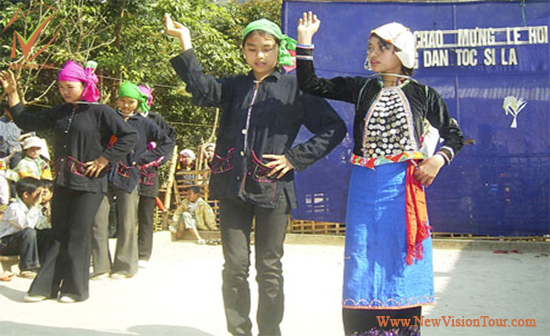
The attire of women is quite
unique. The upper parts of their dresses are different colors and decorated
with silver and tin coins. Their headgear varies according to age. When
travelling, they always carry a woven handbag with red fringes attached to the
hems of the handbag. In the past, men have painted their teeth red and women
have painted theirs black. This custom is no longer observed by the young
people.
Economy
The main forms of income are rice
and corn cultivation. Hunting and gathering are also a significant part of the
life of the Si La.
