




Travel Guide » Vietnam Travel Guide » Vietnam History

The struggle launched by peasants, serfs and slaves in the later half of the 14th century weakened the Tran. Ho Quy Ly was descendant of a high-ranking mandarin of the Le family. He was talented and, as his two aunts married the king, he soon became one of the high-ranking mandarins of the Court. ...

The oppressive occupation soon triggered fierce resistance. As early as the end of 1407, many uprisings began to occur. A descendant of the Tran Dynasty proclaimed himself king in 1407, taking the name Gian Dinh and setting up his headquarters in Nghe An Province.

As early as JuIy 1407, the Ming emperor had incorporated Dai Viet into the Chinese empire under the title of Giao Chi Province, set up a central administration, and divided the country into phu and chau, trying to reach down to village level by 1419.
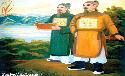
Le Loi, a land-owner from Lam Son in Thanh Hoa Province was born in 1385. Before launching the insurrection against the Ming, he gathered about 1000 followers around him.

Towards the end of the 14th century, a great crisis shook the country. The Ming court, then reigning in China, took advantage of this to invade Dai Viet and to impose a form of direct rule which was to last for twenty years (1407-1427). However, the invaders encountered stiff resistance from the ...

Brothers Nguyen Nhac, Nguyen Lu, and Nguyen Hue led the Tay Son revolution in 1771 and overthrew the Nguyen Dynasty.

Nguyen Anh Gia Long took the throne in 1802 and founded the Nguyen Dynasty (1802-1945).
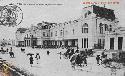
French imperialism, then in full expansion, was attacking a decaying feudal monarchy.
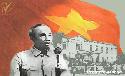
In the summer of 1945, popular discontent reached a climax and revolutionary action involving both political and armed struggle proliferated throughout the country, from north to south, in villages and cities, and among the ethnic minorities in the mountainous regions.
Featured Tours