




Leaving the tomb Festival
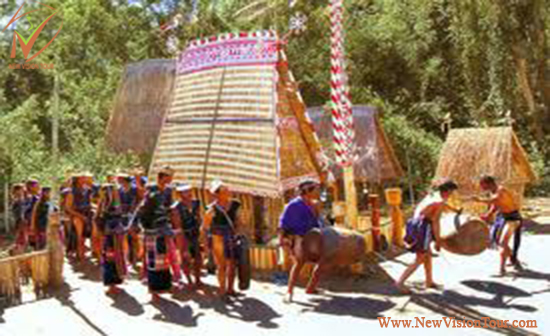
The "leaving the tomb" Festival is the
most important one reserved for the deceased held by their family members. All
the local villagers attend the festival that lasts for three or four days. It
involves two to three slaughtered buffaloes and hundreds of small jars of
liquor.
The meaning of the "Leaving the tomb"
festival is to see off the spirits of the deceased to their permanent world so
that they can reincarnate and continue a new life. As for the living, they
finish their duties and are free to remarry.
The festival is associated to the cycle of
agriculture. It is held in the lunar first month that is the transition time
between the two cycles of production. The festival is also an opportunity for
farmers to give thanks to the gods and pray for a new bumper crop.
Although this ceremony is associated to the death,
it is very cheerful, bearing the nuance of a festival. The festival includes
three steps: taking the tomb to pieces, erecting the new tomb, and seeing off
the death’s spirits to their world and treating the villagers with a feast.
